
Legg-Calvé-Perthes Disease is a temporary childhood condition where the ball-shaped head (femoral head) of the thighbone loses its blood supply, causing the femoral head to collapse. The body absorbs the dead bone cells and replaces them with new cells. These new bone cells eventually reshape the femoral head of the thighbone. Legg-Calvé-Perthes disease causes the hip joint to become stiff and painful.
There are four phases that Legg-Calvé-Perthes goes through that affect the femur head:
Phase 1, Necrosis – Necrosis is when there is no blood supply to the femoral head and the hip joint becomes swollen, inflamed, stiff and painful. Some sections of the bone become dead tissue and the ball of the thighbone becomes less round. This phase can last from several months up to one year.
Phase 2, Fragmentation – In the fragmentation phase the body cleans up the dead cells and replaces them with healthy new cells. The femoral head begins to transform into a round shape. The joint is still irritated and painful. Fragmentation lasts from one to three years.
Phase 3, Reossification – The femoral head continues to shape itself into a round form with new bone. This phase lasts for one to three years.
Phase 4, Remodeling – Healthy blood cells replace the new cells and the reshaping continues. This phase can last several years to complete the healing.
Legg-Calve Perthes is common among first-born children and is usually diagnosed in children 4 to 10 years-old. Usually, the disease affects only one hip, but up to 12 percent of cases can affect both hips.
Symptoms of Legg-Calvé-Perthes Disease:
Common symptoms of Legg-Calvé-Perthes Disease are:
- Pain in the hip area, especially after an activity
- Pain in the knee and thigh area
- Walking with a limp
- Limited range of motion in the hip, thigh or knee
- Shortened leg on the affected side
Diagnosing Legg-Calvé-Perthes Disease:
After a physical examination and a review of your child’s medical history and current activity, your doctor may want to perform some diagnostic procedures. These may include:
- X-rays
- Bone Scans
- MRI
- Blood Tests
Treatment for Legg-Calvé-Perthes Disease:
Shriners Hospitals for Children® treatment options for Legg-Calvé-Perthes disease are centered around protecting the hip from further injury and stress, and keeping the thigh bone’s ball in the hip socket. Some treatment options include:
Anti-inflammatory medications – Medicines containing ibuprofen can help relieve pain associated with this disease and help reduce swelling. Your child’s doctor will prescribe the appropriate dose based on the severity of the disease.
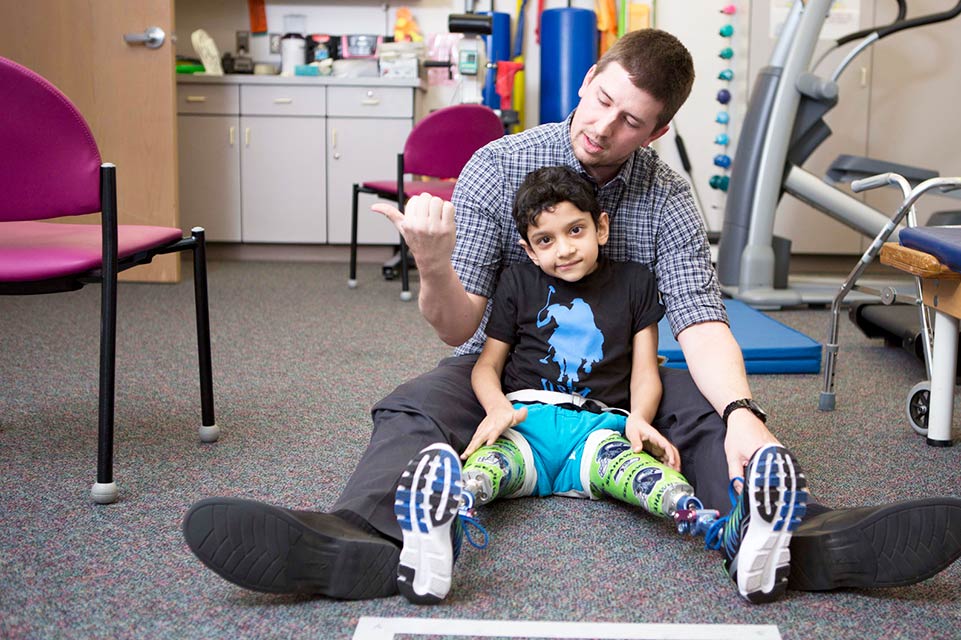
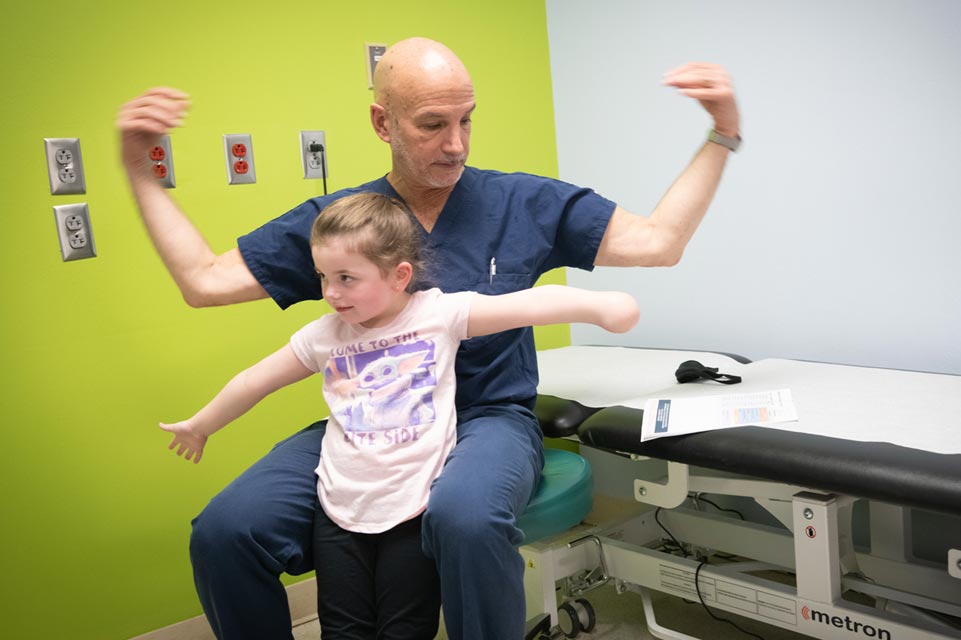
Physical Therapy – Range-of-motion exercises can help with the mobility of your child’s joints and may be part of a home physical therapy treatment.
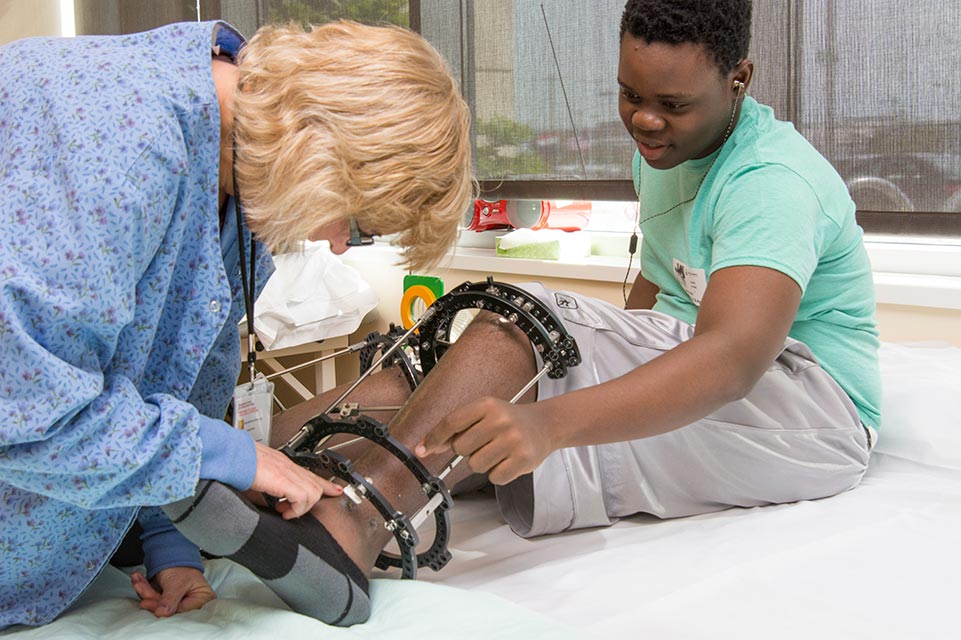
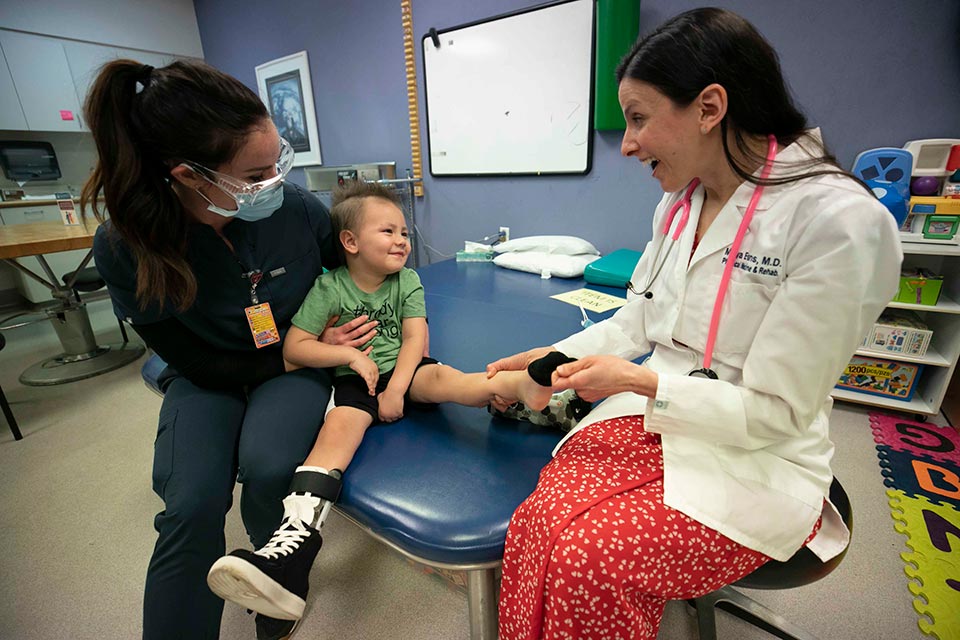
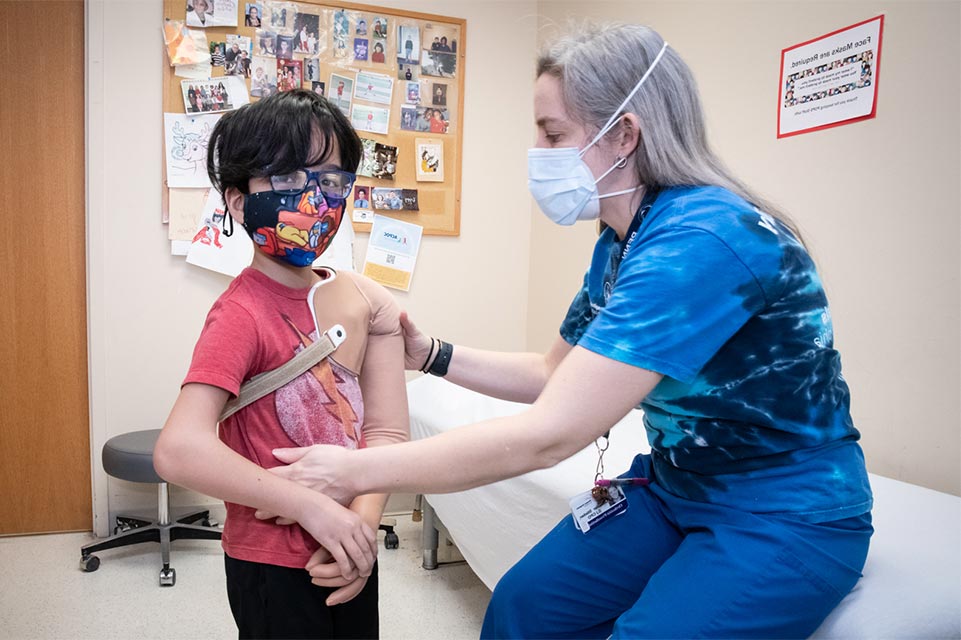
Bracing, Casting, Traction – In some cases your child’s doctor may recommend temporary immobilization of the bone as part of their treatment. This can be done through braces, casts and traction, where a pulling force is applied to the bone.
Surgery – If the groin muscle has shortened as a result of limping, it may have to be surgically removed from the bone. Your child may be in a cast up to eight weeks after surgery to allow the muscle to grow to a normal length. In other cases, surgery is need to replace the hip ball within the socket, or reposition the hip socket.