

Limb Lengthening Surgery
Limb lengthening surgery may seem like the most obvious treatment for children with severe limb length discrepancies, but in fact is almost always the last choice. That’s because limb-lengthening surgery has a very high risk for complications and morbidity, or disease. It’s also a difficult procedure for the child and parents that lasts up to one year.
Your child may be a candidate for limb lengthening surgery if he or she has:
- A significant arm or leg length discrepancy
- A bone or joint deformity
- A congenital deformity such as a short femur
- After a trauma such as a growth plate fracture or fracture that hasn’t healed
- After an infection such as Osteomyelitis
- After treatment of a tumor in the bone
- Short stature, such as dwarfism
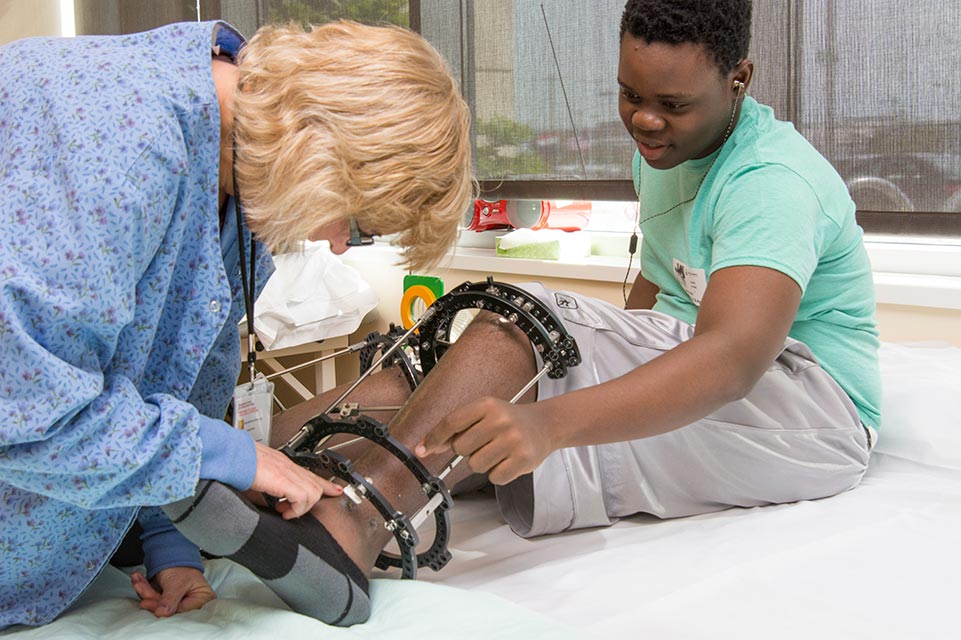
Shriners Hospitals for Children® performs limb lengthening procedures using the Ilizarov method. This technique was developed in Russia in the 1950s by a doctor who had treated World War II veterans who had leg fractures that had not healed. The Ilizarov method uses an external fixation frame placed around the limb with rods that are inserted into the bone. The bone has been surgically cut to allow new bone to form in the gap between bone ends. The rods on the external device are periodically turned to apply pressure to the bone, causing it to “grow” and make room for more bone development. Other structures like nerves, blood vessels, muscle and skin grow at the same time.
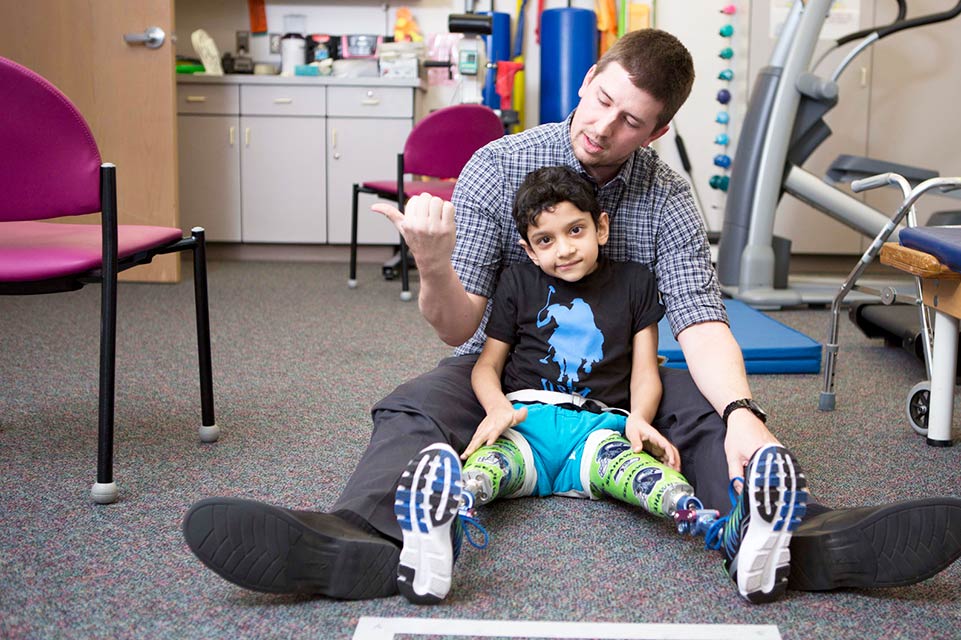
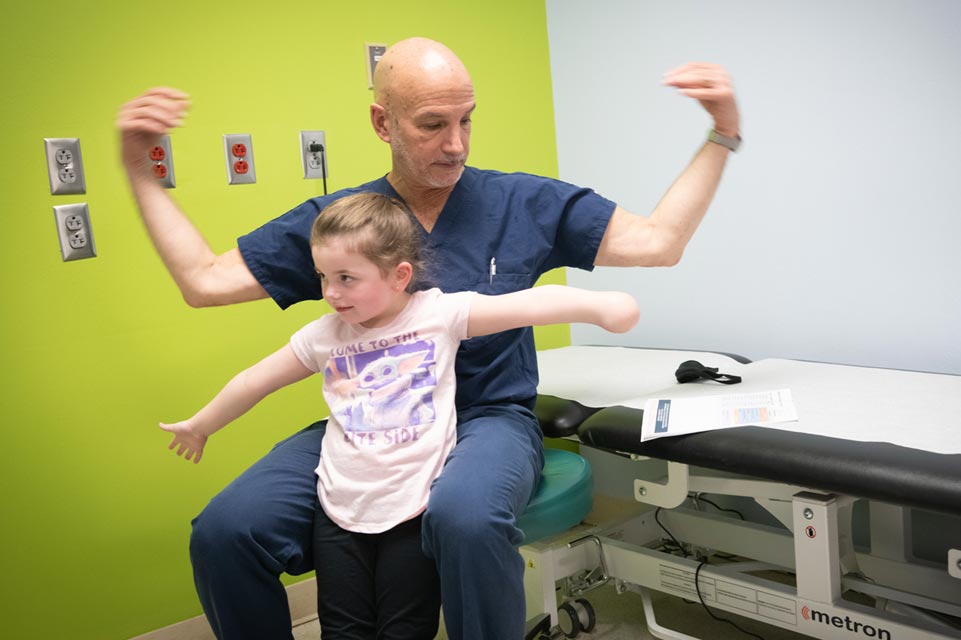
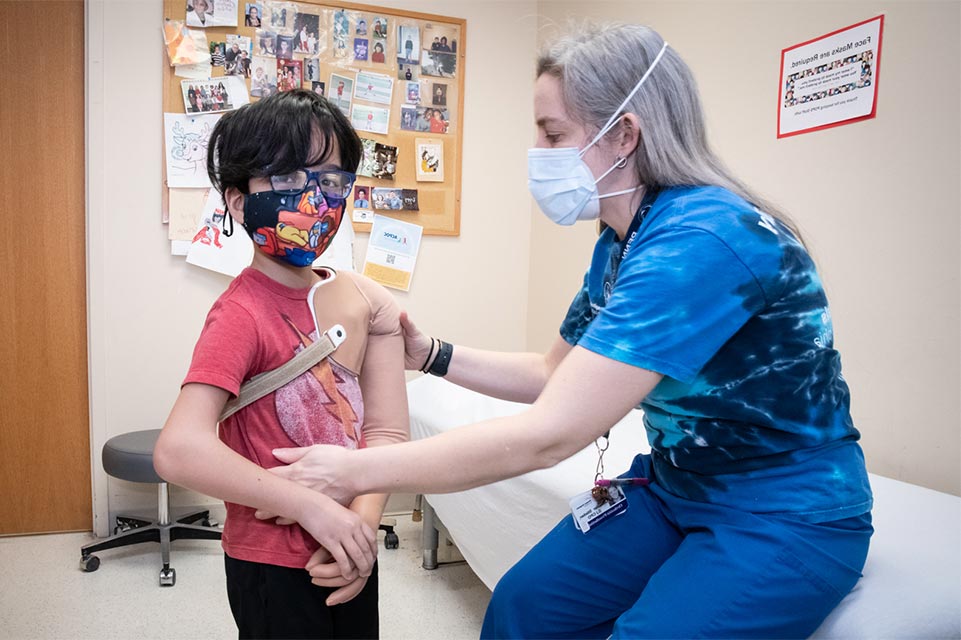
Patients undergoing this procedure are still able to walk or move their arm during the process. Once the external fixator device is removed the child will undergo physical therapy and/or occupational therapy to gain strength, develop muscle and maximize range of motion and function.