

Multiple Hereditary Exostosis (MHE) is an inherited disorder of bone growth. People who have MHE grow exostosis or boney bumps on their bones that vary in size location and number. Although any bone can be affected, the long bones (leg, arms, fingers, and toes), pelvis and shoulder are most commonly affected. The face and skull are usually not affected.
Exostosis
An exostosis is a bone growth that is abnormal or different from the underlying architecture of the normal bone. The exostosis is covered by a cartilage cap. These abnormal growths are benign. Sometimes doctors refer to exostosis as tumor, which is in general term meaning a mass and does not imply a malignancy or cancer. Exostoses start near the growth plates bones that are located near the ends of the bones. This explains why exostoses grow near joints and may hinder motion. The exostosis can be pedunculated, rounded, or sharp and continue to grow while a child is growing. When a person is full grown, exostoses usually stop growing.
Problems Caused by MHE
Because the exostosis grows near the growth center of the bone, the affected area can be shorter or angulated. Persons with MHE tend to be shorter than average, and may possess bowed arms or legs. Exostosis can cause stiffness, especially about the elbows, forearms, and hips, because the exostoses block motion. Exostosis can be painful as they irritate surrounding structures. Exostosis about the knees can interfere with running and walking. Rarely, exostosis grows near nerves or tendons, which can lead to complications.
Less than 1 percent of the time, the benign exostosis of MHE can become a malignant tumor called a chondrosarcoma. This happens after adulthood when skeletal growth has ceased. The typical age for development of a chondrosarcoma is between 20 and 50. If a person with MHE notices ongoing exostosis growth after they have stopped growing, they should contact their doctor immediately.
Treatment
Some people with MHE never require treatment. They have minimal deformity or minor decreases in motion that does not hinder function. If an exostosis is painful, unattractive or limits motion, then the “bump” can be surgically removed.
Reoccurrences Uncommon
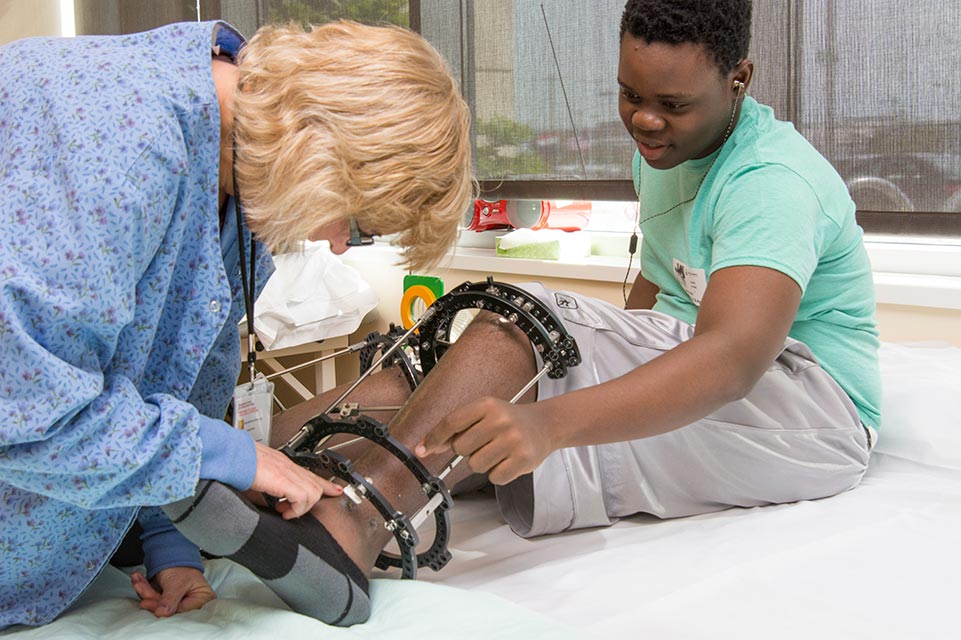
If an exostosis causes a growth abnormality such bowing, just removing the exostosis may allow the bone to straighten as the child grows. In some cases, the bowing is so severe that the exostosis must be removed and the bone straightened at the same. If the bone is considerably short, lengthening may be required. There are several surgical options to accomplish this task and your doctor will explain them to you in detail.