
Slipped Capital Femoral Epiphysis (SCFE)
Slipped Capital Femoral Epiphysis (SCFE) occurs when the top of the thigh bone shifts out of place. SCFE usually affects children approaching adolescence. The top section of the thigh bone is ball-shaped (femoral head) and fits into the hip socket. The ball connects to the straight section of the thigh bone by the growth plate, which, in children, is still developing.
When SCFE occurs, the top of the ball slips off the femoral head through the growth plate. A way to understand SCFE is to think of the ball as a scoop of ice cream and the thigh bone as the ice cream cone. When the ice cream falls off the cone, that is similar to the condition found in SCFE.
Some additional factors that may cause SCFE to develop in children:
- Overweight
- A family history of SCFE
- Diagnosis of an endocrine system (glands and hormones that regulate cell growth) disorder, such as diabetes or Cushing syndrome
- Children with kidney failure, thyroid issues or growth hormone abnormalities
Symptoms of SCFE:
Symptoms of SCFE include:
- Limping or problems walking
- Mild pain or discomfort in the hips, groin area or near the knees
- Severe pain in the affected leg
- Hip stiffness
- Less movement in the affected hip
Diagnosing SCFE:
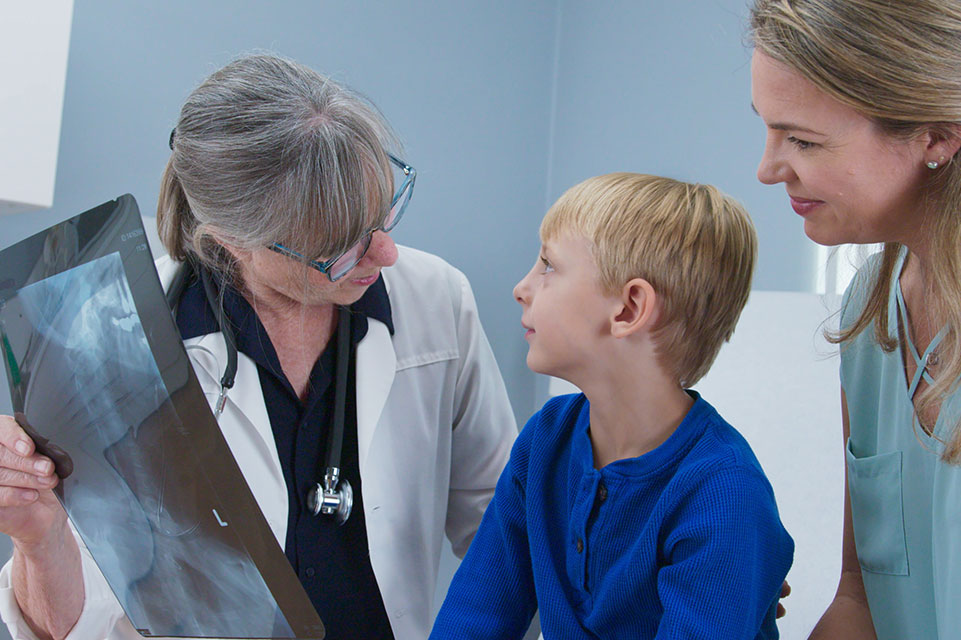
After a physical examination and a review of your child’s medical history and current activity, your doctor may want to perform some diagnostic procedures. These may include:
- X-rays
- MRI
- Observation of walking patterns
Treatment for SCFE:
Shriners Hospitals for Children® offers the following treatment for SCFE:
Repositioning Surgery – Surgery is recommended to prevent further slippage of the ball from the bone. Your child’s doctor will perform surgery to reposition the slip in their hip through a small incision near the affected hip. A metal screw will be placed through the bone, the growth plate and the femoral head’s cap, which will stabilize the bone.