
Spinal Muscular Atrophy (SMA) is a genetic disease that attacks nerve cells, also known as motor neurons in the spinal cord. The motor neurons communicate with voluntary muscles, such as those in the arms and legs and allow these body parts to have control. In spinal muscular atrophy, there is a collection of different muscle diseases that either has a defective or missing survivor neuron gene (SMN1), which produces an essential protein that feeds the motor neurons. Without this protein, lower motor neurons in the spinal cord deteriorate and eventually stop functioning. SMA can affect a child’s ability to walk, crawl, breathe, swallow and control both their head and neck.
A family history of spinal muscular atrophy is a risk factor for all types of SMA. Children must receive the defective gene from both parents to be affected.
There are three types of SMA-I, II or III which are generally determined by the age at the onset of the disease and the degree of the symptoms.
SMA Type III: Referred to as Wolhfart-Kugelberg-Welander disease can occur in infants as early as 18 months and as late as adolescence. Children diagnosed with SMA Type III may have trouble walking, experience mild muscle weakness and are at risk for respiratory infections.
SMA Type II: This type of SMA is also known as intermediate SMA, usually affects infants between 6 and 18 months old. Children with SMA Type II may be able to sit independently but usually do not walk unassisted. The progression of symptoms in SMA Type II varies greatly among children.
SMA Type I is an acute form of SMA and is also referred to as Werdnig-Hoffman disease, or infantile-onset SMA. It has the earliest onset, usually at birth. Infants with this type of SMA exhibit the most severe symptoms. The progressive weakening of muscles can lead to respiratory infections and lung collapse. 60 percent of children with SMA are born with SMA Type I.
SMA Symptoms
SMA Type III: Symptoms for SMA III are:
- Frequent and increasingly severe respiratory infections
- Worsening posture
- Nasal-type speech
SMA Type II: This type of SMA usually occurs within infants between 6 and 18 months and the progression of symptoms varies among each child and includes:
- Legs are more impaired than arms
- Not crawling or walking
SMA Type I: The symptoms found in SMA Type 1 are evident either at birth or within the first few months of the infant’s life. Symptoms include:
- Floppy limbs and trunk
- Limited movements of the arms and legs
- Difficulty holding their head straight
- Difficulties feeding and swallowing
- Weak sucking reflex
- Impaired breathing and respiratory infections
Diagnosing SMA:
Once symptoms of SMA are exhibited, your child’s doctor can conduct several tests to diagnose the type of SMA they may have. These tests include:
Blood Tests: A simple blood test specifically designed to identify any absence or change in the SMN1 gene. If symptoms are present and there is no indication of the disease, additional genetic tests will be needed to confirm the diagnosis.
Muscle Biopsy: A muscle biopsy will be taken if the blood tests were inconclusive. This biopsy involves a small sample of your child’ muscle is removed and examined.
Electromyogram (EMG): This is a test that measures the electrical activity of a single muscle or a group of muscles. An EMG can detect any abnormal electrical muscle activity caused by diseases or neuromuscular conditions.
Treatments for SMA:
There is no cure for spinal muscular atrophy right now. The specific treatment for your child will vary depending upon their age, general health, medical history and the type of SMA they have.
The goal of the treatment at Shriners Hospitals for Children® is to manage any pain that your child may have and to improve their quality of life.
Some of the treatments offered may include:
Respiratory Treatments: Some patients with SMA may contract recurrent pneumonia and other respiratory infections. Breathing treatments or breathing machines may be needed to stop further infections or the recurrence of pneumonia.
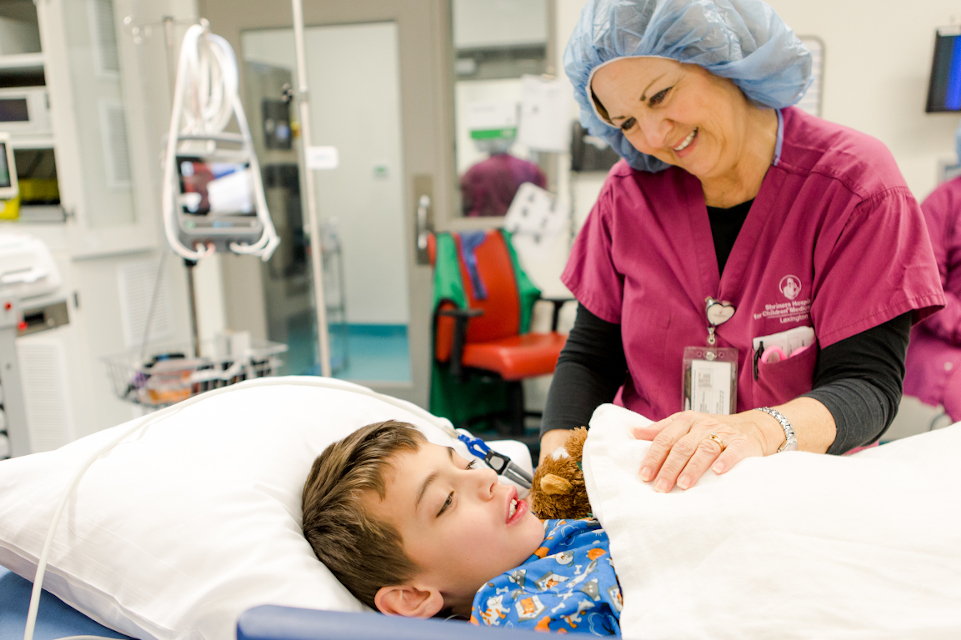
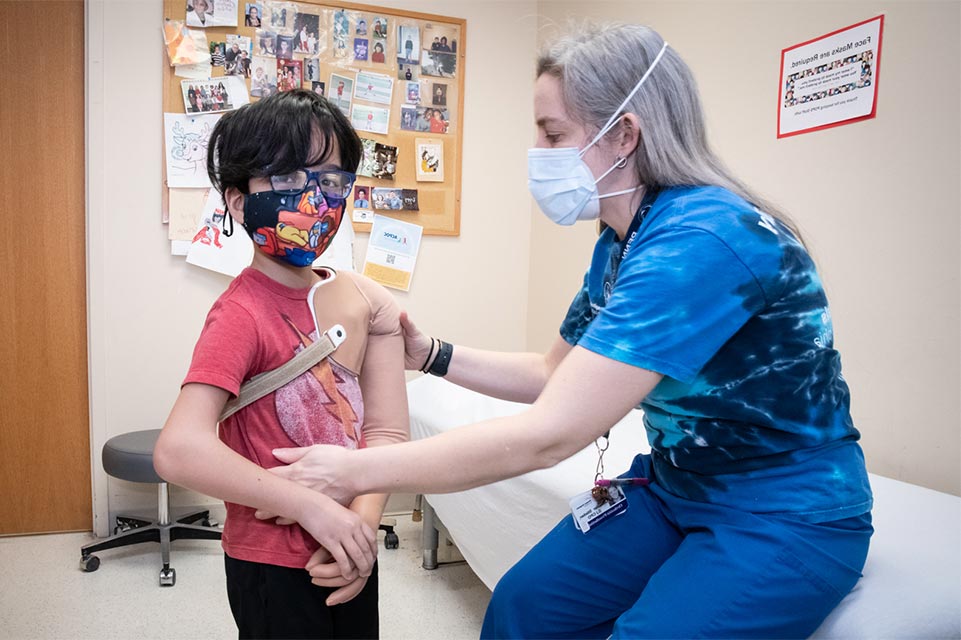
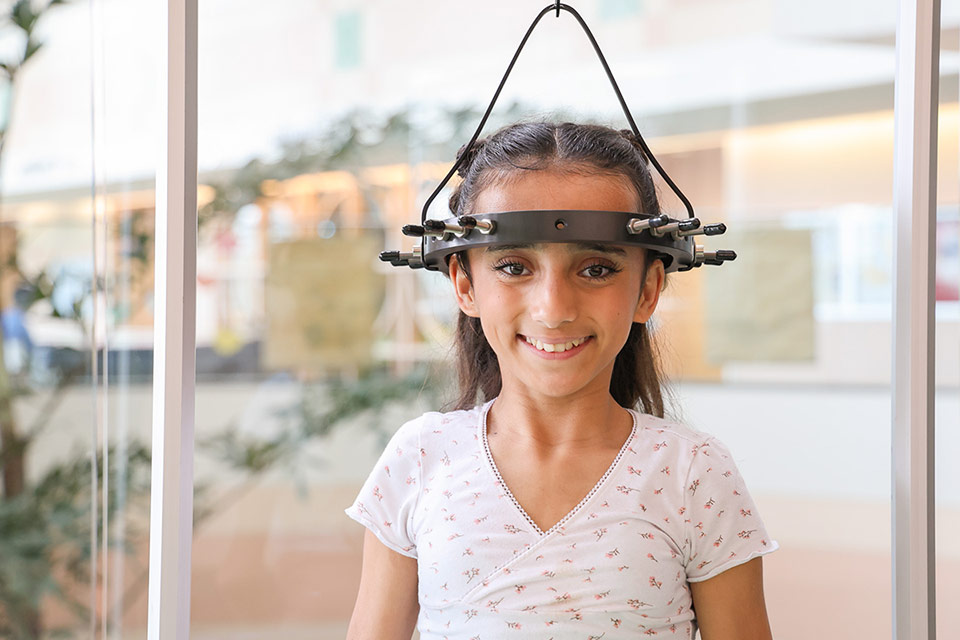
Surgery: Again, depending upon the type of SMA your child has been diagnosed with, some surgical procedures may be necessary to correct spinal curvature and severe contracture or a tightening of the muscles, ligaments, tendons or skin.
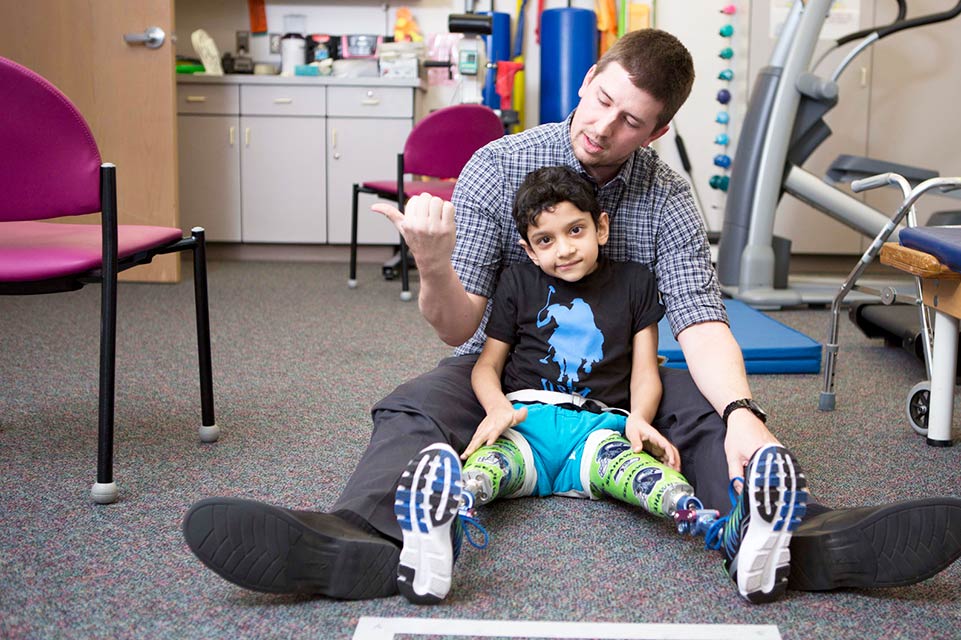
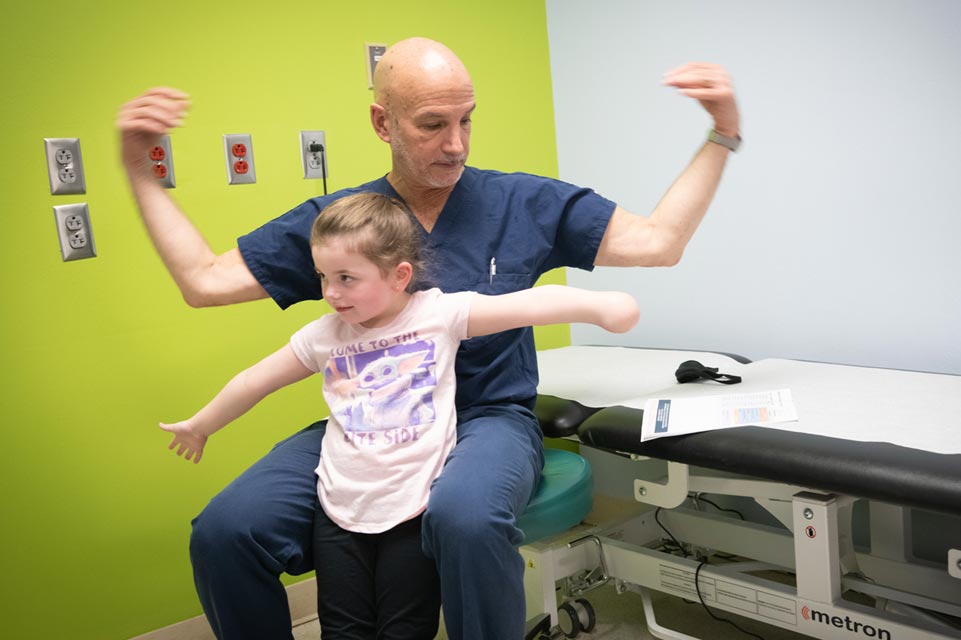
Occupational and Physical Therapy: Both occupational therapy, helping children perform daily activities, and physical therapy, the use of exercise and massage, are among the rehabilitative treatments used to help children with SMA achieve the highest level of functioning possible.